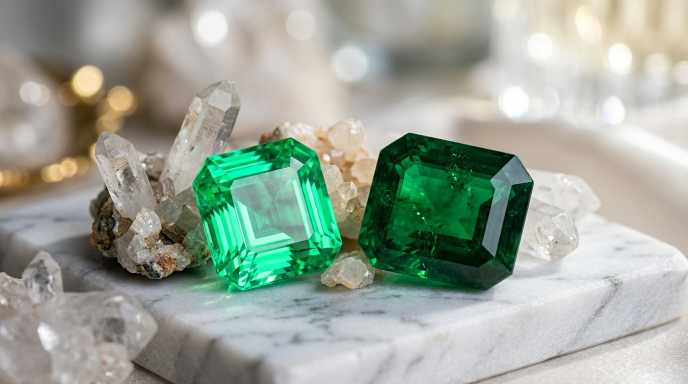
Colombian emeralds have long ruled the gemstone world, but Panjshir stones from Afghanistan are now serious contenders. This guide breaks down the real differences in color, clarity, pricing, and value between these two legendary origins — so you can buy smarter, not just dearer.
Where They Come From: Two Very Different Mountains
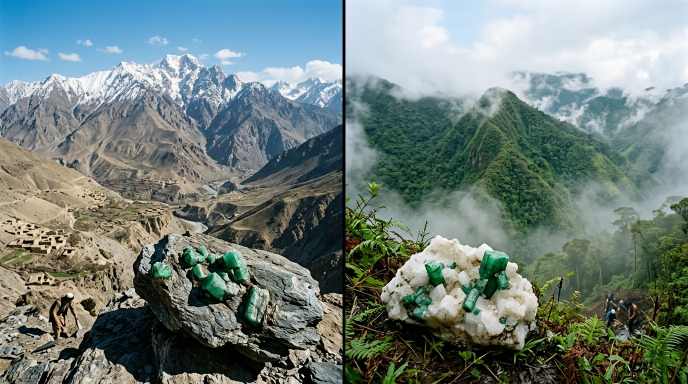
Colombian emeralds have been the gold standard for centuries. Mined primarily from three legendary deposits — Muzo, Chivor, and Coscuez — these stones are formed in the country's Eastern Cordillera under unique geological conditions that produce the vivid green color collectors dream about. Colombia has historically supplied around 90% of the world's emeralds, and names like "Muzo green" have become shorthand for the finest color money can buy. Panjshir emeralds, on the other hand, are relative newcomers to the international stage. Though emeralds were discovered in Afghanistan back in the 1970s, it wasn't until around 2015–2017 that Panjshir Valley stones began making a serious splash in the global market. Mined from steep, rugged terrain about 100 kilometers northeast of Kabul, these emeralds come from deposits in areas like Khenj, Makni, and Mikeni. Mining here is genuinely difficult work — the terrain is punishing, and the region's political instability has made consistent supply a challenge. That scarcity, ironically, is part of what makes them so desirable today.
Color, Clarity, and Character: What Sets Them Apart
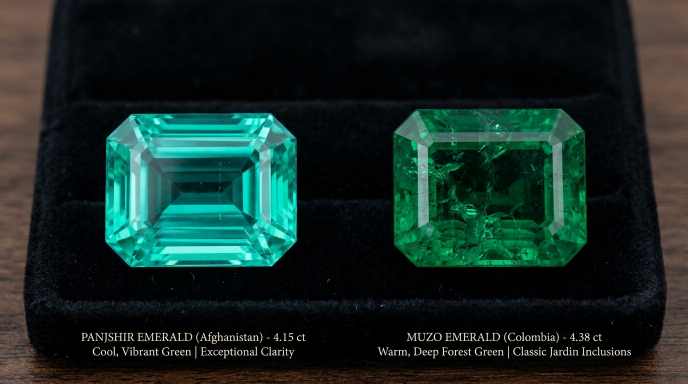
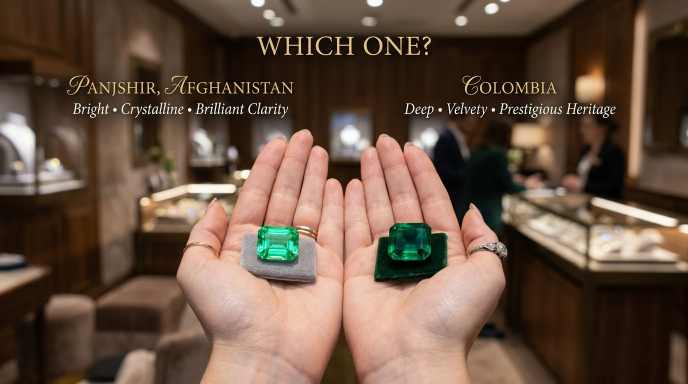
Here's where things get interesting. Colombian emeralds are famous for their lighter, livelier green tone — a bright, slightly bluish-green that seems to glow from within. Muzo stones in particular are prized for a pure, vivid green with a warm cast, while Chivor emeralds tend to run a bit cooler and bluer. Colombian stones also contain the classic "three-phase inclusions" — tiny cavities holding gas, liquid, and a solid crystal — which gemologists use almost like a fingerprint to confirm their origin. Panjshir emeralds lean toward a richer, more saturated green. Many dealers describe the finest Afghan stones as having a "parrot green" or vivid bluish-green that can rival — and sometimes surpass — the depth of color seen in Colombian material. Interestingly, Panjshir emeralds also tend to be cleaner. Several industry observers note that Panjshir material is typically less included than Colombian rough, which means cutters can sometimes produce cleaner finished stones. That said, Panjshir rough has its own quirks. Experienced buyers know that many Afghan emerald crystals have a lighter-colored core. If a cutter isn't careful, a stone that looks beautifully dark in rough form can lose significant color after faceting — especially in smaller stones. So while the best Panjshir emeralds are absolutely world-class, selecting and cutting them requires real expertise.
The Price Tag: What You'll Actually Pay
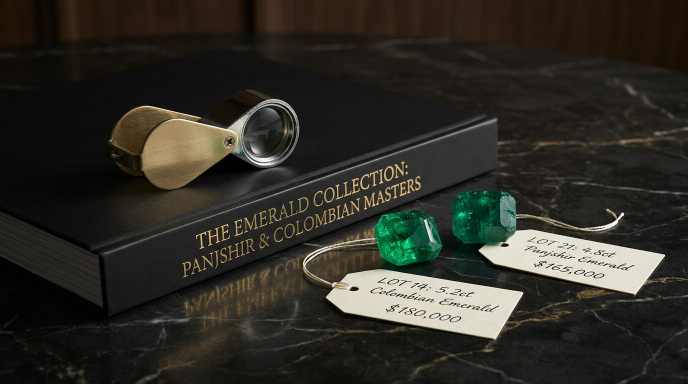
Let's talk numbers — because at the end of the day, your wallet has a vote too. Colombian emeralds still command the highest prices at the top end of the market. In 2026, commercial-quality Colombian stones run roughly $300 to $1,000 per carat. Fine-quality stones jump to $1,000–$5,000 per carat, while premium Muzo-grade emeralds can fetch $5,000–$20,000 per carat. At the investment grade — large, vivid green, minimally treated stones with certified Muzo provenance — prices routinely exceed $20,000 per carat and can climb past $100,000 for exceptional pieces. Panjshir emeralds generally trade at a discount to comparable Colombian stones, though the gap is narrowing fast. Collector-grade Panjshir emeralds commonly sell for over $4,000 per carat, with fine-quality stones ranging roughly $3,000–$15,000 per carat depending on size, color saturation, and clarity. In the Indian market, Panjshir emeralds range from about INR 3,500 to INR 40,000 per carat, with exceptional stones going much higher. One important note: treatment matters enormously for both origins. Most emeralds are oiled to improve clarity, and certified "no oil" or "insignificant treatment" stones can command 2–4 times the price of moderately oiled equivalents. So when comparing prices, always check the treatment grade on the certificate — a minor-oil Panjshir might easily outprice a heavily treated Colombian.
Summary: Which One Should You Choose?
So, Panjshir or Colombian? The honest answer is: it depends on what you value. If you're buying for prestige, provenance, and long-term investment, Colombian emeralds — especially from Muzo — remain the safest bet. They have centuries of market recognition, consistent demand at auction, and a proven track record of appreciation. A certified Muzo emerald with vivid color and minimal treatment is still the king of the green gemstone world. But if you're looking for exceptional color, better clarity, and potentially better value for money, Panjshir emeralds deserve serious consideration. The finest Afghan stones genuinely rival Colombian quality, and their relative rarity — driven by limited supply and difficult mining conditions — could mean stronger price growth in the years ahead. My advice? Don't get too hung up on the name on the certificate. Look at the stone itself. A vivid green, eye-clean Panjshir emerald with a good cut and minor oil treatment can be every bit as breathtaking as its Colombian cousin — and sometimes, it'll leave more money in your pocket too. At the end of the day, the best emerald is the one that makes you stop and stare. Whether it came from the mountains of Colombia or the valleys of Afghanistan is just the backstory.
Questions Readers Often Ask
Why are Panjshir emeralds generally cheaper than Colombian emeralds if the quality is comparable?
It's mostly about market recognition and supply history. Colombian emeralds — especially from Muzo and Chivor — have been the global standard for centuries, so they carry a "prestium tax" that buyers are willing to pay. Panjshir emeralds only entered the international market in earnest around 2015–2017, so they haven't built the same brand equity yet. That said, the price gap is narrowing fast as collectors and dealers recognize that top Afghan stones can rival Colombian quality in color and even surpass them in clarity.
If Panjshir emeralds tend to be cleaner, why do cutters sometimes struggle with Afghan rough?
Cleaner doesn't always mean easier. Many Panjshir emerald crystals have a lighter-colored core, which can be tricky for cutters. A rough stone might look beautifully dark on the outside, but once faceted — especially into smaller stones — the color can drop off significantly. Colombian rough, while often more included, tends to have more consistent color distribution. So experienced cutting is crucial with Panjshir material to avoid heavy weight loss and disappointing color in the final gem.
Should I prioritize origin or treatment grade when comparing these two emeralds?
Treatment grade matters more than most buyers realize. A "no oil" or "insignificant oil" Panjshir emerald can easily outprice a heavily oiled Colombian stone, and vice versa. Most emeralds from both origins are oiled to improve clarity, but certified low-treatment stones command 2–4 times the price of moderately treated ones. My advice: look at the stone's actual beauty first, then check the certificate for treatment level and origin. A vivid, eye-clean Panjshir with minor oil can be a smarter buy than a heavily treated Muzo with the same price tag.
Featured Products
Interested in our gemstones?
View Our Collection →